Tiancheng Zhixian (Shenzhen) Technology Co., Ltd.
News

How Can an LVDS to eDP Converter Board for Industrial LCD Displays Extend Equipment Life and Simplify Display Upgrades

2026-10-21 0 Leave me a message

As industrial equipment manufacturers seek reliable ways to modernize display systems without replacing existing controllers, SKY-TDM provides an LVDS to eDP Converter Board for Industrial LCD Displays that bridges legacy LVDS interfaces and modern eDP LCD panels. This compact conversion solution helps OEMs simplify hardware upgrades, address LCD sourcing challenges, and maintain dependable display performance in industrial applications.

An LVDS to eDP converter board enables an industrial controller with LVDS video output to work with a compatible LCD panel that uses the Embedded DisplayPort (eDP) interface. By avoiding a complete controller redesign, manufacturers can reduce integration costs, extend equipment service life, and access a broader selection of display panels. This article explains how the conversion process works, which specifications matter, how to evaluate compatibility, and why customized engineering support is important for long-term industrial deployment.

LVDS to EDP Converter Board for Industrial LCD Displays

Table of Contents

  1. Why Does LVDS to eDP Conversion Matter for Industrial Equipment?
  2. How Does an LVDS to eDP Converter Board Work?
  3. Which Features Matter in an Industrial Converter Board?
  4. What Are the Main Technical Specifications?
  5. How Can You Verify LCD Compatibility?
  6. Where Are These Converter Boards Used?
  7. What Are the Benefits of Upgrading to eDP?
  8. How Should OEMs Select a Converter Board?
  9. Frequently Asked Questions
  10. Conclusion: A Practical Path to Display Modernization

Why Does LVDS to eDP Conversion Matter for Industrial Equipment?

Industrial display systems often remain in service for many years. Factory automation terminals, CNC machine interfaces, diagnostic instruments, and embedded computers may continue using the same controller long after their original LCD panels become difficult to source.

One challenge is the transition between display interfaces. Low-Voltage Differential Signaling (LVDS) has been widely used in industrial LCD systems, while Embedded DisplayPort (eDP) is common in newer display modules. When an existing controller outputs LVDS but a replacement LCD requires eDP, the interfaces cannot simply be connected with a passive cable.

An LVDS to eDP Converter Board for Industrial LCD Displays provides an active signal-conversion solution. It allows manufacturers to retain a suitable existing controller while integrating a compatible eDP panel through an appropriately configured conversion board.

This approach can help companies:

  • Reduce the need for a complete motherboard redesign.
  • Address the discontinuation or limited availability of legacy LCD panels.
  • Shorten engineering development and product qualification cycles.
  • Maintain established industrial software and controller platforms.
  • Improve flexibility when evaluating alternative LCD suppliers.

For equipment with a long service life, interface conversion can be a practical strategy for managing component obsolescence without unnecessarily replacing functional electronics.


How Does an LVDS to eDP Converter Board Work?

LVDS and eDP use different signaling architectures and communication protocols. An active converter board receives the LVDS video signal, processes the input according to its supported configuration, and generates an eDP output suitable for a compatible display panel.

A typical integration arrangement follows this signal path:

Industrial Controller → LVDS Input → Converter Board → eDP Output → Industrial LCD Panel

Depending on the board design, the interface arrangement may also provide panel power, backlight enable, brightness adjustment, and other supporting connections. These functions must be checked against the actual board and LCD specifications.

Successful conversion depends on more than matching connector shapes. Engineers must verify input channel configuration, video timing, output lane requirements, panel initialization, power sequencing, and cable assignments. Incorrect settings can result in a blank screen, unstable images, incorrect colors, or backlight problems.

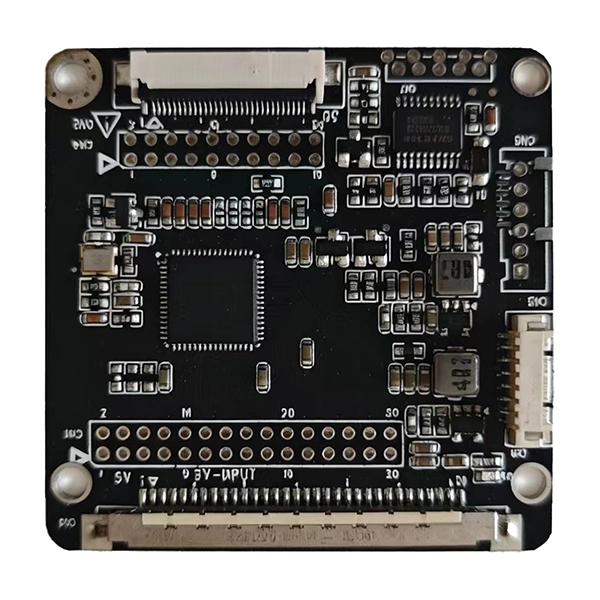
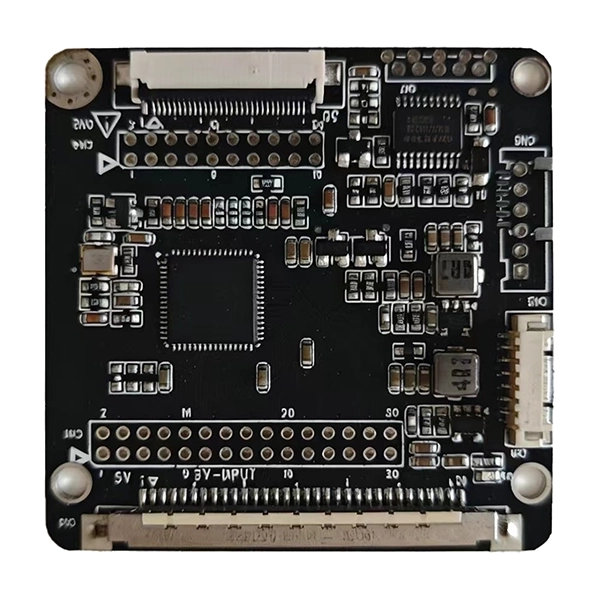
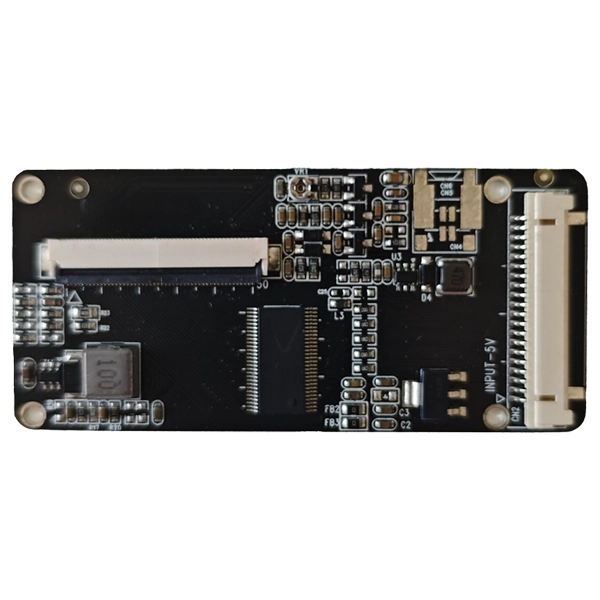
SKY-TDM's converter board is designed for industrial LCD integration, with engineering customization available for supported panel configurations. For further details, visit the LVDS to eDP Converter Board product page.


Which Features Matter in an Industrial Converter Board?

Industrial applications require stable operation, predictable integration, and long-term component availability. A suitable converter board should therefore be evaluated as part of the complete display system rather than as an isolated electronic component.

1. Stable Signal Conversion

Reliable signal reception and transmission are essential for consistent image output. PCB layout, impedance control, signal routing, and cable quality can influence performance, especially when high-speed differential signals are involved.

2. Compact Mechanical Design

Space inside industrial enclosures is often limited. A compact board can simplify installation in embedded computers, control panels, and equipment with restricted internal clearance. SKY-TDM's listed product design measures approximately 50 × 50 mm; mechanical drawings should be checked before finalizing an enclosure.

3. Flexible Configuration

Industrial LCD modules can differ in resolution, timing, connector pinout, power requirements, and initialization behavior. Configurable firmware and engineering support can help adapt a converter to a specific panel instead of relying on assumptions based on interface names alone.

4. Industrial Operating Reliability

Component selection, thermal conditions, electromagnetic interference, and power stability all affect long-term reliability. The board must be evaluated against the actual operating environment, including temperature, vibration, electrical noise, and continuous-use requirements.

5. Integration and Customization Support

Access to compatible cables, connector adaptation, panel parameter configuration, and verification testing can reduce engineering risk. These services are particularly valuable for OEM projects with fixed installation dimensions or long product lifecycles.


What Are the Main Technical Specifications?

The following table summarizes the principal specifications published for SKY-TDM's LVDS to eDP converter board. Confirm the final configuration with the supplier before using these values in a production design.

Specification Published Information Engineering Consideration
Input Interface Single-channel or dual-channel LVDS Match the controller's actual LVDS configuration.
Output Interface Embedded DisplayPort (eDP) Verify the panel's supported eDP lane configuration.
Supported Display Type Industrial TFT LCD panels Confirm the exact LCD model and electrical requirements.
Board Dimensions Approximately 50 × 50 mm Check mounting holes, clearance, and connector access.
Firmware Customization available Confirm timing, initialization, and configuration requirements.
LVDS Input Power 5 V is specified for the listed input connector configuration Verify connector pinout and voltage before applying power.
eDP Panel Connection FFC and JST connector options are listed Confirm pin mapping, pitch, cable orientation, and panel power.
OEM/ODM Services Supported Discuss custom cables, firmware, and integration needs.

Important: Resolution, refresh rate, operating temperature, and other performance limits depend on the applicable hardware revision and display configuration. Do not assume that every eDP panel or every resolution is supported. Obtain confirmation for the intended controller, converter, cable, and LCD combination.


How Can You Verify LCD Compatibility?

Compatibility verification should take place before purchasing production quantities. Two LCD panels may share an eDP interface yet differ in power requirements, timing, connector assignments, or backlight control.

Use the following checklist when evaluating a proposed LVDS-to-eDP conversion:

  • Identify the source controller: Record its LVDS channel configuration, color depth, timing parameters, and output voltage.
  • Confirm the target LCD model: Obtain the manufacturer's datasheet and panel revision information.
  • Compare signal requirements: Check resolution, refresh rate, eDP lane count, link rate, and supported timing.
  • Verify connector assignments: Compare every relevant power, ground, differential signal, auxiliary, and control pin.
  • Check panel power: Confirm logic voltage, current requirements, power sequencing, and any required enable signals.
  • Review backlight control: Verify the required supply, enable logic, and PWM brightness-control arrangement.
  • Test the physical installation: Confirm cable length, bend radius, mounting clearance, and connector orientation.
  • Run system-level validation: Test startup, image stability, brightness control, thermal behavior, and electromagnetic compatibility as applicable.

Sharing the controller model, LCD datasheet, and existing cable details with the supplier helps engineers identify incompatibilities before they become costly production problems.


Where Are These Converter Boards Used?

An industrial LVDS to eDP converter board can support various display modernization and embedded integration projects when the source and target hardware meet the board's electrical and timing requirements.

Industrial Automation and HMI Systems

Human-machine interfaces, CNC control panels, and factory automation terminals may need replacement displays while retaining their established control electronics. A converter can help bridge the interface gap and reduce unnecessary redesign.

Medical and Laboratory Equipment

Diagnostic instruments and laboratory systems often require dependable displays over extended product lifecycles. Converter integration should be accompanied by appropriate system verification and any applicable regulatory assessment.

Transportation and Embedded Computing

Railway control equipment, vehicle-related terminals, and embedded industrial PCs can benefit from flexible panel sourcing. Temperature, vibration, power quality, and electromagnetic compatibility must be assessed against the requirements of the specific installation.

Self-Service Kiosks and Intelligent Terminals

Self-service terminals and specialized information systems may use embedded controllers with fixed display outputs. An active converter can simplify the adoption of a compatible replacement panel while preserving the existing platform.

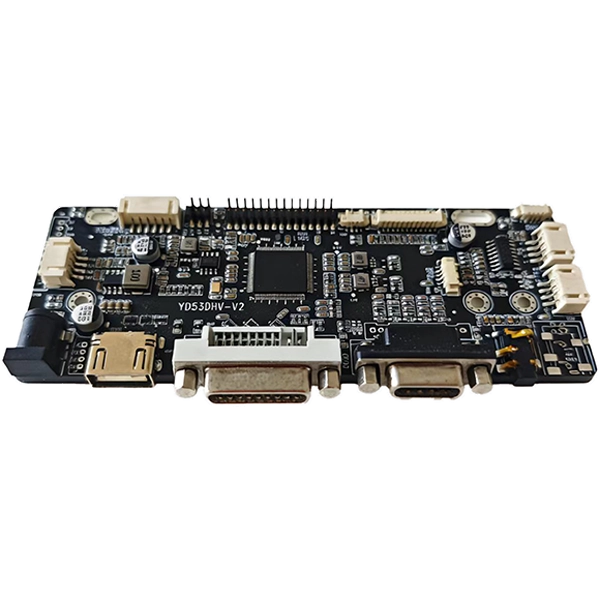
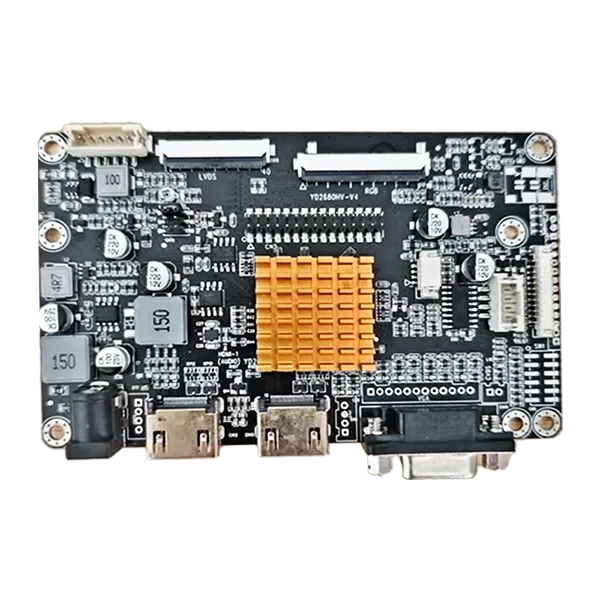
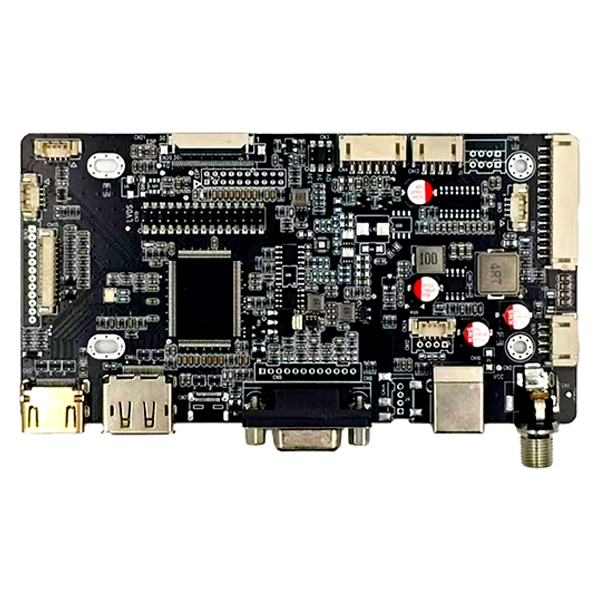
For broader display integration options, explore SKY-TDM's LCD driver board solutions.


What Are the Benefits of Upgrading to eDP?

Moving from an LVDS panel to an eDP panel can provide access to newer display modules and a different interface architecture. However, the practical benefits depend on the selected panel, converter design, and overall system implementation.

Upgrade Consideration Potential Benefit What to Verify
Panel Availability Access to compatible newer display models Supply continuity and lifecycle status
Hardware Reuse Retention of a suitable existing controller Signal compatibility and conversion requirements
System Integration Potentially simpler display-cable routing Connector layout and cable design
Display Performance Access to panels with suitable higher-resolution options Actual bandwidth, timing, and converter limits
Development Cost Potential reduction in redesign and qualification effort Engineering, testing, and production costs

It is important to distinguish the capabilities of the eDP standard from those of a particular converter. Higher resolution, lower system power, and improved image performance are not guaranteed by conversion alone. They depend on the complete hardware configuration.

For manufacturers maintaining equipment already deployed in the field, the most significant advantage may be the ability to replace an obsolete display without redesigning an otherwise functional controller system.


How Should OEMs Select a Converter Board?

Choosing an appropriate converter requires a combination of technical evaluation, supplier assessment, and lifecycle planning. A board that works during an initial bench test may still need additional validation before it can be deployed in demanding industrial conditions.

Consider these five selection criteria:

  1. Electrical compatibility: Verify LVDS inputs, eDP output requirements, panel power, backlight signals, and grounding.
  2. Resolution and timing support: Confirm the intended operating mode against the board's documented capabilities.
  3. Mechanical integration: Evaluate board dimensions, mounting options, connector clearance, and cable routing.
  4. Environmental suitability: Check operating temperature, thermal management, vibration resistance, and EMC requirements.
  5. Supplier engineering capability: Assess customization, sample testing, documentation, production consistency, and long-term supply support.

SKY-TDM offers industrial display integration services, including firmware customization, LCD compatibility evaluation, and cable adaptation for supported projects. These capabilities can help OEM teams address project-specific requirements before moving from prototype testing to volume production.

For the most efficient technical review, prepare the following information:

  • Existing controller or mainboard model.
  • Target LCD model and datasheet.
  • Required resolution and refresh rate.
  • LVDS and eDP connector specifications.
  • Panel and backlight power requirements.
  • Operating temperature range and installation conditions.
  • Prototype quantity, expected production volume, and lifecycle expectations.

This information allows the engineering team to assess feasibility, identify required modifications, and recommend an appropriate validation plan.


Frequently Asked Questions

1. What is an LVDS to eDP converter board?

An LVDS to eDP converter board is an active electronic interface that converts a supported LVDS video input into an eDP output for a compatible LCD panel. It is commonly considered when an existing controller must be retained while the display is upgraded.

2. Can an LVDS controller work with any eDP LCD panel?

No. The controller, converter, and target panel must have compatible signal configurations, timing, resolution, power requirements, and connector assignments. Always confirm the exact LCD model before integration.

3. Does the converter board support single-channel and dual-channel LVDS?

The SKY-TDM product information lists support for both single-channel and dual-channel LVDS input. The correct configuration and its supported display modes should be confirmed for the intended application.

4. Can the firmware be customized?

Yes. SKY-TDM lists firmware customization and engineering support for compatible display projects. Depending on the hardware and panel, configuration may include display timing, panel parameters, and related control functions.

5. What is the maximum supported resolution?

The maximum resolution depends on the converter hardware revision, input configuration, eDP output capabilities, panel timing, and cable quality. Consult SKY-TDM for a confirmed resolution and refresh-rate assessment for your specific LCD model.

6. Can the board be used for continuous industrial operation?

The board is intended for industrial display integration, but suitability for continuous operation depends on the actual operating temperature, power conditions, enclosure design, and application requirements. Validate the complete system under representative conditions.

7. Can SKY-TDM provide custom cables and connector adaptation?

SKY-TDM lists cable customization and connector adaptation among its engineering support services. Provide the source and target connector details so the team can evaluate the required cable configuration.

8. What information should I provide when requesting a quotation?

Include the controller model, target LCD datasheet, required resolution, interface pinouts, power requirements, estimated order quantity, and any customization needs. This helps the supplier assess compatibility and prepare a more accurate quotation.


Conclusion: A Practical Path to Display Modernization

An LVDS to eDP Converter Board for Industrial LCD Displays can help equipment manufacturers address panel obsolescence, integrate compatible newer LCDs, and extend the useful life of existing hardware. Its value depends on careful interface matching, reliable signal conversion, correct power and backlight configuration, and thorough system-level testing.

For OEMs and system integrators, selecting a converter with appropriate customization and technical support can make the transition more manageable. SKY-TDM combines industrial display experience with engineering services designed to support LCD compatibility assessment, firmware configuration, and cable integration.

If you are planning an industrial LCD replacement, developing a new embedded display product, or seeking a solution for an obsolete LVDS panel, contact us at SKY-TDM. Share your LCD model, controller specifications, and project requirements to discuss a suitable LVDS-to-eDP conversion solution, technical compatibility, and customization options for your application.

Explore the SKY-TDM LVDS to eDP Converter Board or visit our LCD driver board product range to learn more about industrial display integration solutions.

Related News
Leave me a message
X
We use cookies to offer you a better browsing experience, analyze site traffic and personalize content. By using this site, you agree to our use of cookies. Privacy Policy
RejectAccept