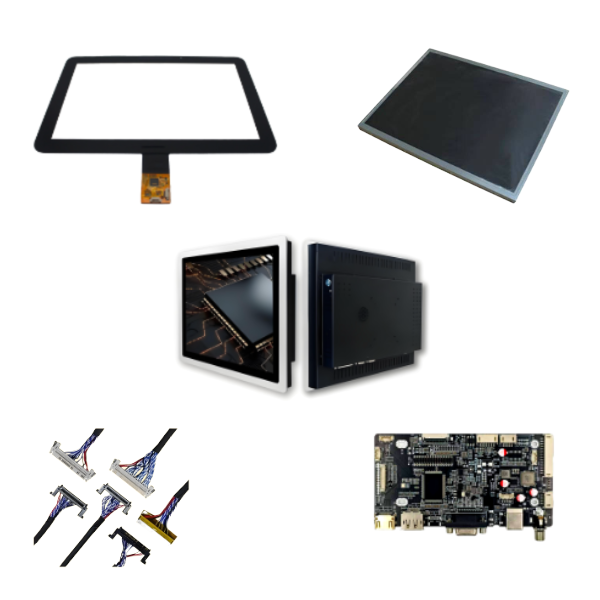
Article Summary: If you are sourcing a versatile display adapter board that accepts HDMI, DP, VGA, and Type C inputs and outputs LVDS or eDP signals, this guide answers the most practical questions about the HDMI and DP and VGA and Type C To LVDS EDP Interface AD Board from SKY-TDM. You will learn what the board does, why it matters for industrial and commercial displays, how to integrate it, which configurations to choose, and when to deploy it for maximum reliability and cost efficiency.
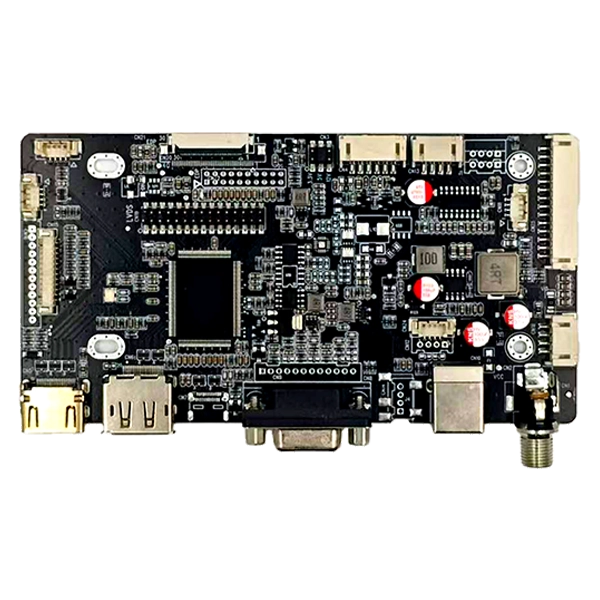
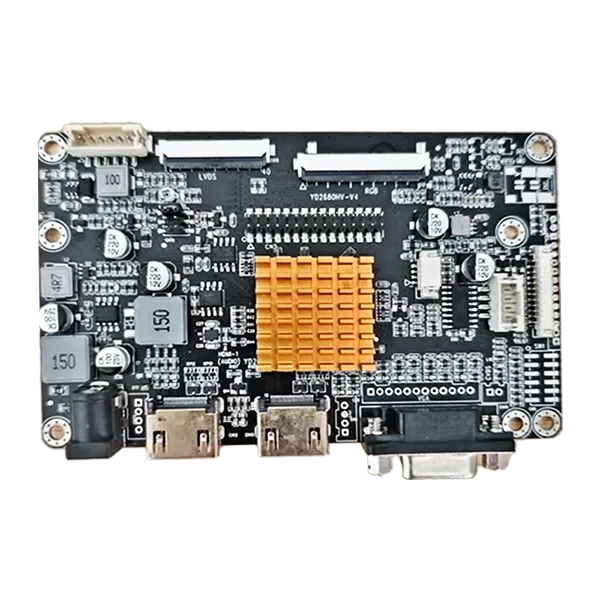
An HDMI and DP and VGA and Type C To LVDS EDP Interface AD Board is a signal conversion and driving board that accepts four common video input standards — HDMI, DisplayPort (DP), VGA, and USB Type-C (with DP Alt Mode) — and converts them into LVDS or eDP output signals for LCD panels. In practical terms, it is the bridge between modern video sources and embedded display panels that still use LVDS or eDP interfaces. Companies such as SKY-TDM design these boards to simplify panel integration, reduce engineering risk, and support long-life industrial deployments.
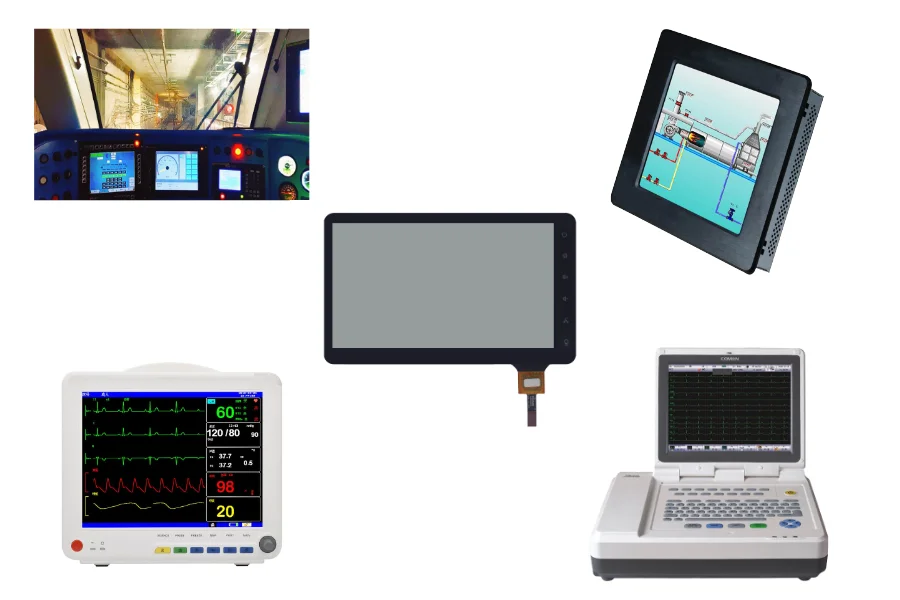
This type of AD board typically includes a scalar or bridge chipset, input connectors, an on-board power section, backlight control, and firmware that handles EDID, resolution scaling, and panel timing. It is widely used in industrial monitors, medical displays, kiosks, point-of-sale terminals, gaming cabinets, digital signage, and embedded computing systems. Because it supports multiple inputs, one board can serve many source devices, which reduces inventory complexity and speeds up product development.
For engineers and procurement teams, the key value is flexibility. Instead of designing a separate driver board for each connector type, a single multi-input AD board can be configured for different panels and use cases. SKY-TDM’s HDMI and DP and VGA and Type C to LVDS eDP interface AD board is built around this multi-source concept, making it easier to standardize display platforms across product lines.
The importance of this AD board comes down to three practical pressures: source compatibility, panel longevity, and total cost. Modern devices increasingly output HDMI, DisplayPort, or Type-C video, while many industrial LCD panels still rely on LVDS or eDP. Without a conversion board, engineers would need multiple interface boards or custom cabling, which increases BOM cost and failure points.
For OEMs and system integrators, this means less time debugging signal compatibility and more time focusing on enclosure design, touch integration, and user experience. SKY-TDM positions these boards as a core building block for custom display solutions, especially when a project requires both modern connectivity and legacy panel support.
The conversion process follows a clear signal chain. Each input is received, decoded, scaled if necessary, and then output in the panel’s native format. The board’s firmware handles EDID communication, resolution mapping, and panel timing, while the power section supplies the panel and backlight. The table below summarizes the typical conversion path for each input type.
| Input Interface | Typical Signal Path | Output to Panel | Common Use Case |
|---|---|---|---|
| HDMI | HDMI receiver → scaler/bridge → LVDS/eDP transmitter | LVDS or eDP | Industrial monitors, digital signage, kiosks |
| DisplayPort (DP) | DP receiver → bridge → LVDS/eDP output | LVDS or eDP | High-resolution embedded systems, medical displays |
| VGA | VGA ADC → scaler → LVDS/eDP output | LVDS or eDP | Legacy PCs, industrial control cabinets |
| USB Type-C | Type-C DP Alt Mode receiver → bridge → LVDS/eDP output | LVDS or eDP | Mobile devices, compact all-in-one terminals |
The board’s output stage is matched to the panel’s requirements: LVDS for panels that use serial differential signaling, or eDP for panels that use embedded DisplayPort. Firmware configuration is critical here. The board must know the panel’s resolution, lane count, color depth, and timing. SKY-TDM provides configuration support so that integrators can match the AD board to specific LCD panels without redesigning hardware.
In addition to video conversion, the board typically includes backlight driver interfaces, OSD control options, and power sequencing. These features matter in industrial environments where display reliability and long-term stable operation are essential. The result is a compact, ready-to-integrate board that reduces the need for custom electronics.
Choosing the right configuration depends on the panel, the source devices, and the environment. The table below compares common configurations and their best-fit applications.
| Configuration Focus | Key Consideration | Best For |
|---|---|---|
| LVDS output | Wide panel compatibility, mature ecosystem, stable supply | Industrial monitors, POS terminals, legacy panel replacement |
| eDP output | Higher bandwidth, thinner cables, support for higher resolutions | Medical displays, high-resolution embedded systems, slim enclosures |
| HDMI + DP + VGA + Type-C inputs | Maximum source flexibility in one board | Multi-device kiosks, conference displays, testing labs |
| HDMI + Type-C only | Compact design, lower cost, modern source focus | Consumer-facing terminals, compact all-in-one systems |
| Industrial temperature range | Reliability in harsh environments | Factory automation, outdoor enclosures, transportation |
The best approach is to start with the panel datasheet and the source device list. If the panel is LVDS-based and the project needs legacy VGA support, a full multi-input board is the safest choice. If the panel is eDP-based and the enclosure is thin, prioritize eDP output and a compact board layout. For projects that need both long-term supply and design simplicity, a configurable multi-input platform from SKY-TDM can be adapted across multiple models.
It is also worth considering firmware support, EDID configuration, and whether the supplier offers customization for connector placement and panel timing. These details often determine whether a board integrates smoothly or requires additional engineering effort.
A multi-interface AD board is most valuable in specific situations. Use the following list as a practical decision guide.
In contrast, if your product uses a single source type and a fixed panel, a simpler single-input board may be more cost-effective. The multi-interface board shines when flexibility, compatibility, and long-term supply stability are priorities.
Q1: Can one AD board really support HDMI, DP, VGA, and Type-C at the same time?
Yes. Multi-input AD boards are designed to accept all four input types, though the active input is typically selected via OSD or auto-detection. The board converts the selected source to LVDS or eDP for the panel.
Q2: What is the difference between LVDS and eDP output?
LVDS is a mature differential signaling standard widely used in industrial panels. eDP offers higher bandwidth, thinner cabling, and better support for high resolutions. The choice depends on your panel’s native interface.
Q3: Does the board support custom panel resolutions and timings?
Most industrial AD boards support firmware configuration for resolution, lane count, color depth, and timing. SKY-TDM provides configuration support to match specific LCD panels.
Q4: Is Type-C input compatible with all devices?
Type-C input works with devices that support DP Alt Mode. Not all Type-C ports output video, so source device compatibility should be verified.
Q5: Can this board be used in industrial and medical applications?
Yes, when the board is specified with an industrial temperature range and appropriate reliability testing. Medical and industrial deployments may require additional certification and validation.
Q6: What should I provide to get the right AD board?
Provide the panel datasheet, source device list, resolution and timing requirements, environmental conditions, and any connector or enclosure constraints. This information helps SKY-TDM recommend the most suitable configuration.
Whether you are building an industrial monitor, a medical display, a kiosk, or a compact all-in-one terminal, the right AD board can simplify your design and protect your schedule. Contact us today to discuss your panel, input requirements, and deployment environment. SKY-TDM’s team can help you select the right HDMI, DP, VGA, and Type-C to LVDS/eDP AD board, configure firmware, and support your integration from prototype to production. Contact us now to get a tailored recommendation and competitive quotation for your next display project.