Tiancheng Zhixian (Shenzhen) Technology Co., Ltd.
News

How to Choose the Right Industrial LCD?

2026-11-12 0 Leave me a message

In the field of industrial embedded devices, industrial LCDs serve as the core medium for human-machine interaction. During product selection, many R&D teams often fall into two pitfalls: selecting under-specced panels, which leads to poor image clarity and narrow viewing angles once deployed; or blindly pursuing high specifications, resulting in obvious performance overkill that drives up material costs and squeezes product profit margins.

The key to selecting an industrial LCD is to align with real-world application scenarios and find the optimal balance among size, resolution, brightness, contrast, and viewing angles. With years of experience in LCD application scenarios, SKY-TDM recommends tailored products based on specific requirements, helping you avoid unnecessary costs caused by over-specification.

1. Size: Choose the appropriate size based on the application field of the terminal device

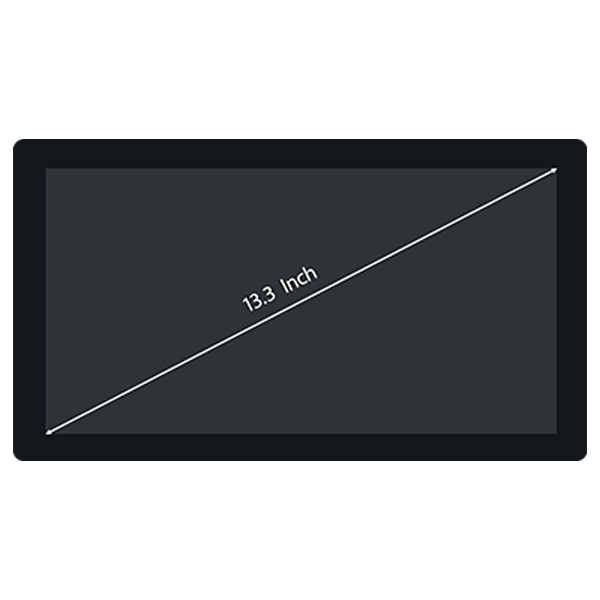
In the industrial sector, this is actually a highly niche product application. Its characteristics are fixed sizes, low demand, and high costs. The main available sizes include 2.8", 3", 4.3", 5.7", 7", 8", 8.4", 10.1", 10.4", 12.1", 15", 15.6", 17", 18.5", 19", 21.5", 23.8", 27", and 32". Different sizes are suitable for products in different fields.

  • 2.8" – 4.5": Suitable for space-constrained devices, commonly used in compact POS terminals, medical infusion pumps, and microcontrollers.
  • 5.7" – 8": The mainstream size for industrial control equipment and the preferred choice for industrial HMIs. Widely applied in small device controllers, simple self-service kiosks, and extensively used in the heavy machinery industry.
  • 10.1" – 12.1": Traditional and mature industrial control specifications. Ideal for rail transit vehicle displays, heavy-duty HMIs, medical patient monitors, and ventilators.
  • 15" – 15.6": Applied in industrial panel PCs, lottery terminals, medical monitors, and ventilators, covering a relatively broad range of fields.
  • 17" – 18.5": Frequently used in sports lottery terminals and self-checkout kiosks, with some applications in the industrial sector.
  • 21.5" – 32": Used in large self-service kiosks, medical ultrasound systems, and endoscopes, belonging to the mid-to-high-end product segment.

Size Selection Principle: Prioritize matching the enclosure structure of the device. Select the appropriate product based on actual needs, and avoid blindly choosing larger screens.

2. Resolution: Industrial LCDs are primarily based on low resolutions, with a maximum resolution of 1920x1080

Resolution determines image clarity and detail. However, compared to consumer electronics, industrial LCDs generally feature lower resolutions. For standard industrial resolutions, please refer to the following information:

Size 2.8” 3” 4.3” 5.7” 7”
Resolution 240*320 320*230 480*272

640*480

320*240

800*480

1024*600

1280*800

Size 8” 8.4” 10.1” 10.4” 12.1”
Resolution

1024*768

800*600

1024*768

800*600

1024*600

1280*800

1024*768

800*600

800*600

1024*168

1280*800

Size 15” 15.6” 17” 18.5” 19”
Resolution 1024*768

1366*768

1920*1080

1280*1024

1266*768

1920*1080

1280*1024
Size 21.5” 23.8” 27” 32”
Resolution 1920*1080 1920*1080 1920*1080 1920*1080

3. Brightness: Industrial devices generally require higher brightness than consumer products

The minimum brightness for industrial products is around 300 cd/m² (most laptop LCDs also sit at 300 cd/m²), while the maximum can reach up to 2000 nits. Naturally, there is a significant cost difference across various brightness levels, with 500 cd/m² being the standard for most products.

  • Indoor environments (standard HMIs, POS, lottery terminals, self-checkout kiosks): 300–500 cd/m². This ensures clear visibility and meets general device requirements.
  • Rail transit and semi-open spaces: 700–1000 cd/m² is required to achieve clear visibility and combat ambient light.
  • Outdoor high-brightness scenarios: Requires high-brightness screens of 1000 cd/m² or above. These products typically have low volumes and high prices.

4. Contrast Ratio: The contrast ratio for industrial devices typically ranges from 800:1 to 2000:1

The contrast ratio directly affects the visual clarity of text, waveforms, and images. A standard 1000:1 contrast ratio is perfectly adequate for most industrial equipment, including industrial HMIs, POS terminals, medical patient monitors, and ventilators. However, for specialized devices like ultrasound systems and endoscopes, high-contrast products are required, as these applications demand extremely high precision in rendering black and grayscale images.

5. Viewing Angle: The visual performance of the display when viewed from different directions

Mainstream industrial LCDs on the market are primarily divided into two categories: TN and IPS, which have significantly different viewing angles.

  • TN Panels: Offer a distinct cost advantage. They provide clear viewing from the front but are prone to whitewashing and color shifting from the sides. They are ideal for closed equipment with fixed workstations where operators face the screen directly.
  • IPS (Full-View) Panels: Feature wide viewing angles vertically and horizontally. They are the preferred choice for multi-user operations, self-service kiosks, rail transit, and medical equipment, ensuring stable image quality from any viewing angle.

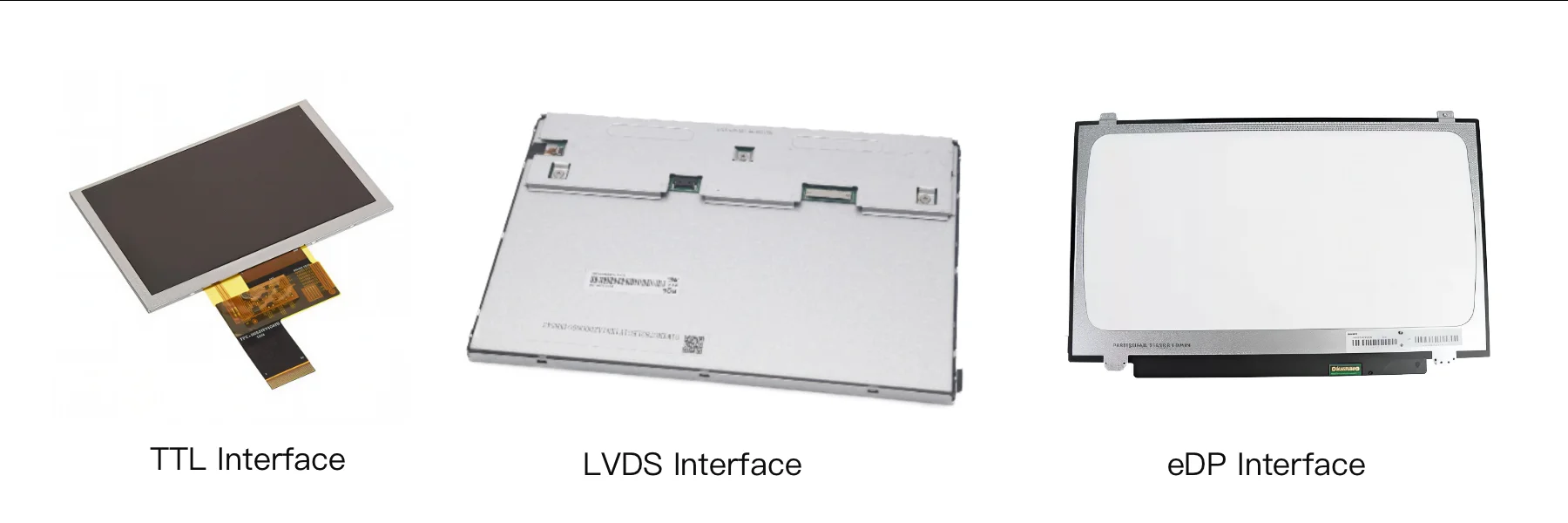
6. Signal Interface: The mainstream interfaces for industrial LCDs are TTL, LVDS, and eDP

Products under 10.1" primarily use the TTL interface, while those 10.1" and above are mainly equipped with LVDS and eDP interfaces. Among them, LVDS is the most common, as it offers greater stability in industrial environments.

How to Choose the Right Industrial LCD at the Early Stage of a Project?

If you are unsure how to select the best option during your project evaluation, please feel free to contact SKY-TDM. We will recommend the most suitable products tailored to your specific application.

Related News
Leave me a message
X
We use cookies to offer you a better browsing experience, analyze site traffic and personalize content. By using this site, you agree to our use of cookies. Privacy Policy
RejectAccept