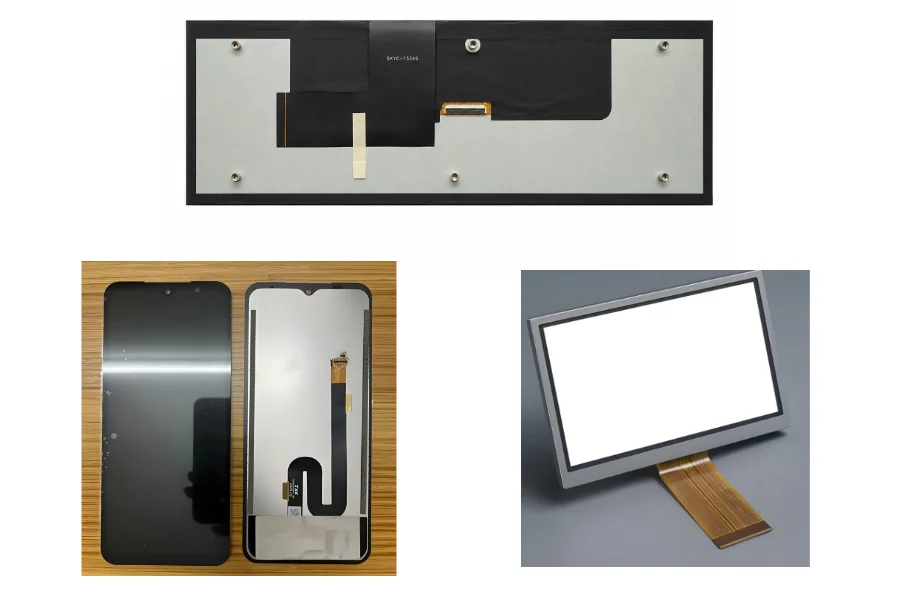
Article Summary
A Resistive Touch Screen Panel remains a reliable choice for many industrial, medical, retail, automotive, and embedded applications where accuracy, durability, cost efficiency, and compatibility with different input methods are important. Unlike touch technologies that depend on electrical conductivity, resistive touch panels detect physical pressure, allowing users to operate them with fingers, gloves, or styluses. :contentReference[oaicite:0]{index=0}
This article explains how a Resistive Touch Screen Panel works, why businesses choose this technology, what problems it solves, how to select the right panel, and how Tiancheng Zhixian (Shenzhen) Technology Co., Ltd. provides professional touch panel solutions for different application requirements.
Touch interaction has become an essential part of modern electronic devices. From factory control systems and medical equipment to payment terminals and smart devices, users expect interfaces that are accurate, stable, and easy to operate.
Although various touch technologies have developed rapidly, Resistive Touch Screen Panel solutions continue to play an important role because of their practical advantages. Their pressure-based sensing method makes them suitable for environments where users may wear gloves, use a stylus, or operate equipment under demanding conditions. :contentReference[oaicite:1]{index=1}
Many manufacturers face challenges when selecting touch solutions, including high production costs, unstable operation in harsh environments, compatibility issues, and complicated customization requirements. A properly designed resistive touch panel can help overcome these challenges by providing dependable performance with flexible design options.
A Resistive Touch Screen Panel operates through physical contact between two conductive layers. When pressure is applied to the screen surface, the upper layer bends and touches the lower layer, creating a change in electrical resistance. The controller detects this change and calculates the exact touch position. :contentReference[oaicite:2]{index=2}
The working process can be summarized as follows:
Because the technology relies on pressure instead of electrical properties of the input object, resistive panels can recognize different input tools, including:
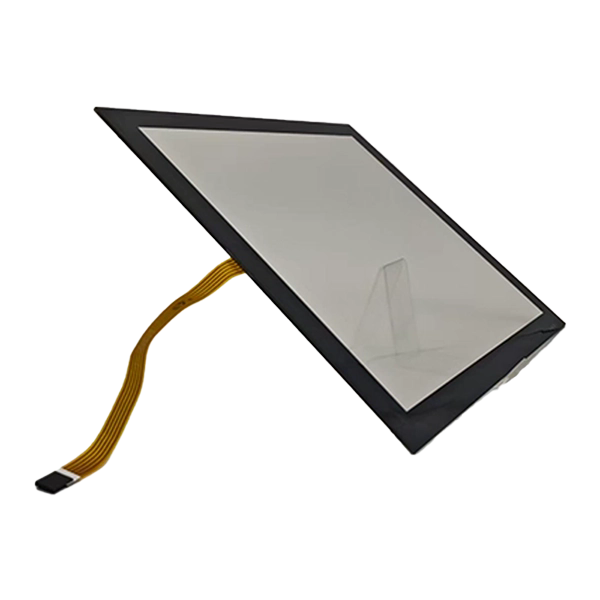
Understanding the internal structure helps engineers choose the right touch solution. A typical Resistive Touch Screen Panel consists of several functional layers designed to provide accurate sensing and long-term operation.
| Component | Function |
|---|---|
| Protective Surface Layer | Provides resistance against scratches, dust, and daily operation damage. |
| Transparent Conductive Film | Detects electrical changes caused by touch pressure. |
| Spacer Dots | Keeps two conductive layers separated when the panel is not being touched. |
| Glass Substrate | Provides structural support and stability. |
| Touch Controller | Processes signals and converts them into coordinates. |
The combination of these layers allows resistive panels to achieve accurate touch detection while maintaining a simple and cost-effective design. :contentReference[oaicite:3]{index=3}
Businesses select Resistive Touch Screen Panel products because they solve several common challenges in real-world applications.
| Challenge | Resistive Touch Solution |
|---|---|
| Operation with gloves | Pressure-based sensing enables users to operate devices without direct skin contact. |
| Need for precise input | Stylus compatibility allows accurate selections and handwriting input. |
| Cost control requirements | Simple structure helps reduce manufacturing expenses. |
| Industrial environments | Reliable performance in dusty or demanding conditions. |
| Customized product requirements | Flexible sizes, shapes, and integration options are available. |
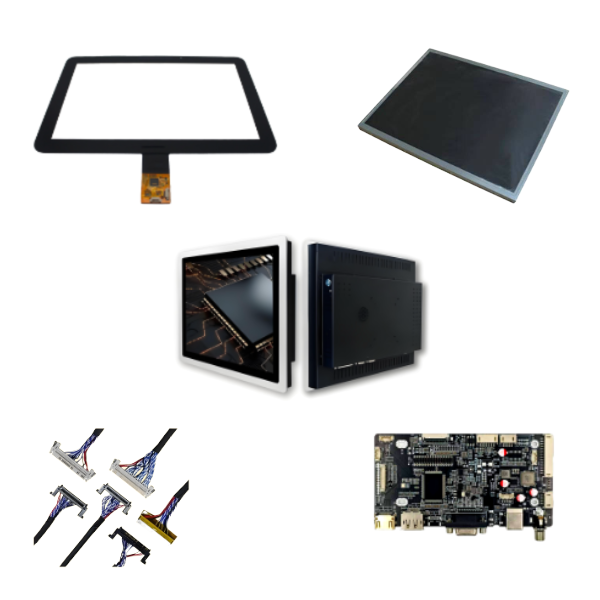
For manufacturers, these advantages mean fewer compatibility problems and better product adaptability. Tiancheng Zhixian (Shenzhen) Technology Co., Ltd. focuses on providing customized touch panel solutions that match different equipment designs and application requirements.
The versatility of Resistive Touch Screen Panel technology allows it to serve many industries.
In industrial environments, reliability is often more important than advanced features. This is why resistive technology remains a preferred option for many professional applications. :contentReference[oaicite:4]{index=4}
Choosing the correct panel requires evaluating several technical and application factors.
| Selection Factor | Important Considerations |
|---|---|
| Screen Size | Select a suitable dimension according to device design and viewing requirements. |
| Touch Accuracy | Choose appropriate sensing technology based on precision requirements. |
| Operating Environment | Consider temperature, humidity, dust, and chemical exposure. |
| Surface Treatment | Select anti-glare, anti-scratch, or protective coatings when needed. |
| Interface Compatibility | Ensure connection methods match the existing electronic system. |
A professional supplier can help evaluate these requirements and recommend the most suitable configuration.
| Feature | Resistive Touch Screen Panel | Capacitive Touch Panel |
|---|---|---|
| Input Method | Pressure-based operation | Electrical conductivity-based operation |
| Glove Operation | Excellent compatibility | Limited depending on design |
| Stylus Accuracy | High precision | Requires special stylus |
| Cost | Generally economical | Usually higher |
Different touch technologies serve different purposes. The best choice depends on the operating environment, user requirements, and product goals.
Proper installation and maintenance can significantly improve reliability and reduce replacement costs.
Yes. Because resistive technology detects physical pressure, users can operate the panel with many types of gloves, making it suitable for industrial and medical environments.
Yes. A stylus is one of the major advantages of resistive touch technology because it provides precise input control.
The service life depends on usage conditions, design quality, and operating environment. High-quality panels can support extensive touch cycles when properly integrated.
Tiancheng Zhixian (Shenzhen) Technology Co., Ltd. provides professional touch panel solutions with attention to product quality, customization needs, and application reliability. The company helps customers develop suitable touch solutions for different industries and equipment requirements.
A Resistive Touch Screen Panel continues to be an effective solution for applications requiring accuracy, flexibility, affordability, and dependable operation. Its pressure-based sensing technology makes it especially valuable in industrial, medical, and professional environments where traditional touch solutions may not meet practical needs.
With customized design capabilities and technical experience, Tiancheng Zhixian (Shenzhen) Technology Co., Ltd. supports customers in developing reliable touch solutions that improve product performance and user experience.
If you need a customized Resistive Touch Screen Panel solution for your project, please contact us today. Our professional team is ready to provide suitable products, technical support, and reliable service to help your business achieve better touch interaction performance.