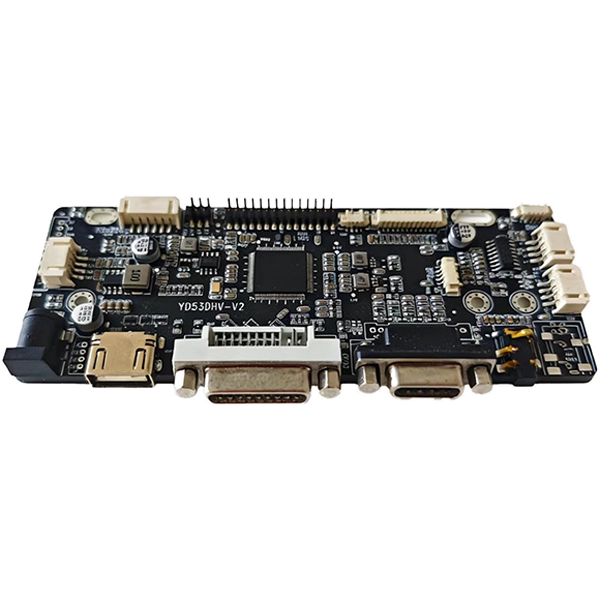
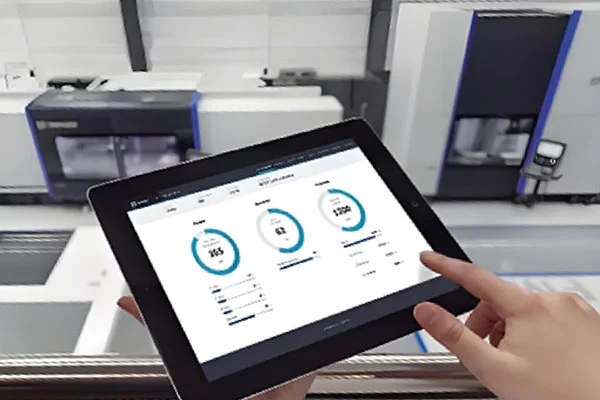
SKY-TDM develops the HDMI and DP and VGA and Type C To LVDS EDP Interface AD Board to help OEMs, system integrators, and industrial equipment manufacturers connect multiple video sources with LVDS or eDP LCD panels through one flexible display controller. By combining HDMI, DisplayPort, VGA, and USB Type-C inputs with multiple LCD output configurations, the board can reduce hardware complexity while supporting demanding embedded display applications.
Modern industrial display systems often need to work with different host computers, graphics interfaces, and LCD panels. Using a separate controller for every interface can increase engineering work, inventory requirements, and integration time. A multi-interface LCD driver board provides a more practical approach by combining several video inputs and display outputs within one industrial-grade PCB.
The HDMI, DP, VGA, and Type-C interface configuration supports a broad range of host platforms, while LVDS and eDP outputs make the controller suitable for different TFT LCD architectures. The board supports configurable panel voltage, backlight output, industrial operating temperatures, and OEM/ODM engineering services, making it suitable for industrial HMIs, CNC equipment, medical devices, kiosks, machine vision systems, and embedded displays.
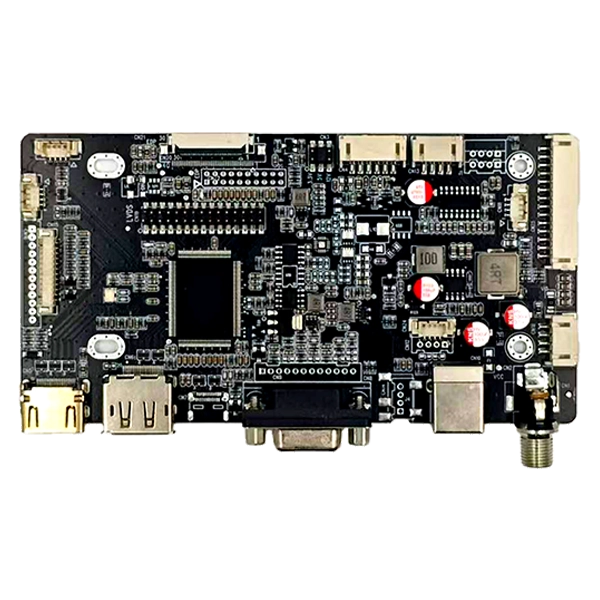
Table of Contents
Why Do Industrial Displays Need Multiple Video Interfaces?
How Does the Controller Board Connect Different Display Interfaces?
What Are the Key Features of the Interface AD Board?
What Are the Main Technical Specifications?
Where Can This Display Controller Be Used?
How Does OEM & ODM Support Improve Display Integration?
How Should Engineers Select the Right Display Controller?
Why Do Industrial Displays Need Multiple Video Interfaces?
Industrial display projects rarely follow a single hardware architecture. One machine may use an industrial computer with DisplayPort, another may rely on HDMI, while older equipment may still use VGA. At the display side, the LCD module may use LVDS or eDP depending on its generation, resolution, size, and design.
This creates a common engineering challenge: the video source and LCD panel do not necessarily use the same interface standard. Without a flexible controller, engineers may need different conversion boards for different projects.
A multi-input display controller can simplify this architecture by supporting:
- HDMI video sources for common digital host systems.
- DisplayPort for modern industrial computers and embedded platforms.
- VGA for legacy computers and equipment upgrades.
- USB Type-C with DP Alt Mode for compatible compact computing platforms.
- LVDS outputs for compatible industrial TFT LCD panels.
- eDP outputs for newer high-performance LCD architectures.
For OEM projects, this flexibility can help reduce the need to redesign the display electronics whenever the host platform changes.
How Does the Controller Board Connect Different Display Interfaces?
The basic role of an LCD driver or AD board is to receive video information from a host device, process the signal, and deliver a suitable display signal to the selected LCD panel. The host-side interface and panel-side interface do not have to be identical.
In this configuration, HDMI, DP, VGA, and Type-C function as video input options. The controller processes these signals and provides LVDS or eDP output according to the connected panel architecture.
The board supports dual-channel 8-bit LVDS and several eDP configurations, including 20-pin, 30-pin, and 40-pin FPC options. This makes panel compatibility an important part of system integration. Engineers should verify the LCD model, resolution, interface type, pin definition, panel voltage, backlight requirements, and firmware configuration before production.
For example, a system integrator upgrading an older VGA-based industrial machine can potentially retain the existing LCD architecture while using a controller that accepts VGA input. Conversely, a new embedded system can use HDMI, DP, or compatible Type-C input while driving an eDP panel.
What Are the Key Features of the Interface AD Board?
1. Multiple Video Input Options
The board combines HDMI, DisplayPort, VGA, and USB Type-C video inputs. This multi-interface architecture gives equipment developers more freedom when selecting industrial computers, embedded boards, and host devices.
2. LVDS and eDP Display Compatibility
Supporting both LVDS and eDP makes the controller suitable for different generations of TFT LCD technology. The available configurations include dual-channel 8-bit LVDS as well as 20-pin, 30-pin, and 40-pin eDP interfaces.
3. Flexible Power Configuration
The controller supports panel voltage options of 3.3V, 5V, and 12V. Backlight output options include 5V, 12V, and 24V. This flexibility is useful when integrating LCD modules with different electrical requirements.
4. Industrial Operating Capability
The specified operating temperature range is -20°C to 80°C. The design also incorporates industrial-grade components, low-ripple power design, and enhanced ESD protection for demanding equipment environments.
5. Image Processing and Expansion Functions
The product information specifies onboard DDR memory, FRC processing, and 180° image rotation. These functions can be valuable in embedded displays where image orientation and display processing need to be adapted to the physical installation.
What Are the Main Technical Specifications?
The following table summarizes the primary specifications available for this multi-interface display controller:
| Item | Specification |
|---|---|
| Video Input | HDMI, DisplayPort (DP), VGA, Type-C |
| Display Output | LVDS and eDP |
| eDP Interface | 20-pin / 30-pin / 40-pin FPC |
| LVDS Output | Dual-channel 8-bit LVDS |
| Panel Voltage | 3.3V / 5V / 12V |
| Backlight Output | 5V / 12V / 24V |
| Audio Amplifier | 3W × 2 |
| Input Voltage | 8V–28V |
| Operating Temperature | -20°C to 80°C |
Because LCD panels can have different pin definitions even when they use the same general interface standard, engineers should treat the specifications as a starting point for compatibility verification rather than assuming every panel is directly interchangeable.
Where Can This Display Controller Be Used?
The combination of multiple video inputs and LVDS/eDP outputs makes this type of controller suitable for a broad range of industrial and embedded display applications.
Industrial HMI Terminals
Human-machine interfaces often need to operate continuously while connecting industrial computers to TFT LCD displays. Flexible video input options simplify hardware platform selection and equipment upgrades.
CNC Machine Interfaces
CNC systems may use different generations of computing hardware. A multi-interface controller can help connect legacy or modern video sources with suitable LCD panels.
Medical Equipment Displays
Medical diagnostic and laboratory equipment can require stable display operation and carefully matched LCD configurations. Panel compatibility testing and customized display parameters can therefore be important during integration.
Machine Vision Systems
Machine vision equipment commonly combines industrial computers, cameras, processing units, and operator displays. Flexible video interfaces allow the display subsystem to accommodate different host configurations.
Open-Frame Monitors and Kiosks
Self-service terminals, kiosks, and open-frame monitors may use different LCD sizes and host platforms. A configurable controller can help manufacturers standardize part of their display architecture across product variants.
How Does OEM & ODM Support Improve Display Integration?
Choosing an LCD driver board is not only about the connector type. Successful integration depends on matching the controller with the exact LCD panel and system architecture.
For OEM and ODM projects, engineering support may include:
- LCD panel compatibility verification.
- Firmware optimization and adjustment.
- EDID modification.
- Backlight parameter tuning.
- Custom LVDS and eDP cable design.
- PCB logo printing for customized equipment.
- Panel voltage and backlight requirement matching.
These services can be especially valuable when a customer needs a customized display assembly rather than a generic controller board. Instead of treating the LCD, driver board, cable, and backlight as independent components, the complete display system can be evaluated as an integrated solution.
For a customized project, buyers should prepare the LCD model number, required video input, input power, backlight requirements, estimated annual quantity, and any firmware or OEM requirements before technical evaluation.
How Should Engineers Select the Right Display Controller?
Before purchasing a controller board, engineers should verify several technical parameters rather than selecting a board solely according to the external connector appearance.
- Confirm the LCD interface. Determine whether the panel uses LVDS or eDP and identify the exact connector and pin configuration.
- Check panel voltage. Verify whether the LCD requires 3.3V, 5V, or 12V.
- Verify the backlight. Confirm the required backlight voltage, enable signal, and PWM requirements.
- Check the video source. Identify whether the host uses HDMI, DP, VGA, or compatible Type-C DP Alt Mode.
- Confirm resolution and timing. The controller firmware must be compatible with the target panel's display parameters.
- Evaluate the operating environment. Temperature, ESD, power stability, and continuous operating requirements should be considered for industrial equipment.
- Discuss customization requirements. For OEM production, cable configuration, firmware, PCB marking, and panel matching should be confirmed before mass production.
This checklist helps reduce compatibility problems during prototype testing and production deployment.
Frequently Asked Questions
Q1: Does the board support both LVDS and eDP LCD panels?
Yes. The controller is designed to support both LVDS and eDP TFT LCD panels. The available configurations include dual-channel 8-bit LVDS and eDP options with 20-pin, 30-pin, and 40-pin FPC interfaces.
Q2: Which video inputs are supported?
The board supports HDMI, DisplayPort, VGA, and USB Type-C video input. Type-C video operation depends on the host device supporting the appropriate DisplayPort Alt Mode functionality.
Q3: What panel voltages are available?
The specified panel voltage options are 3.3V, 5V, and 12V. The appropriate setting should be selected according to the target LCD panel specification.
Q4: Can the controller be customized for an OEM project?
Yes. Customization support can include LCD compatibility verification, firmware optimization, EDID modification, backlight parameter tuning, customized LVDS/eDP cables, and PCB logo printing.
Q5: What information should be provided before requesting a quotation?
It is recommended to provide the LCD panel model, desired video input, input voltage, backlight requirements, expected annual quantity, and any OEM or firmware customization requirements. These details allow the engineering team to evaluate compatibility more accurately.
Final Takeaway
A flexible multi-interface display controller can simplify the connection between modern and legacy video sources and different generations of industrial TFT LCD panels. With HDMI, DisplayPort, VGA, and Type-C inputs combined with LVDS and eDP outputs, the solution can support a wide range of industrial HMI, CNC, medical, kiosk, transportation, and embedded display applications. The configurable panel power, backlight options, industrial temperature range, and OEM/ODM engineering services further support customized display projects.
If you are developing an industrial display, upgrading an existing LCD system, or looking for a dependable controller solution for OEM production, provide your LCD model and interface requirements to SKY-TDM. Contact us with your panel specifications, application requirements, and expected quantity to discuss compatibility, customization options, and a suitable display controller solution for your project.