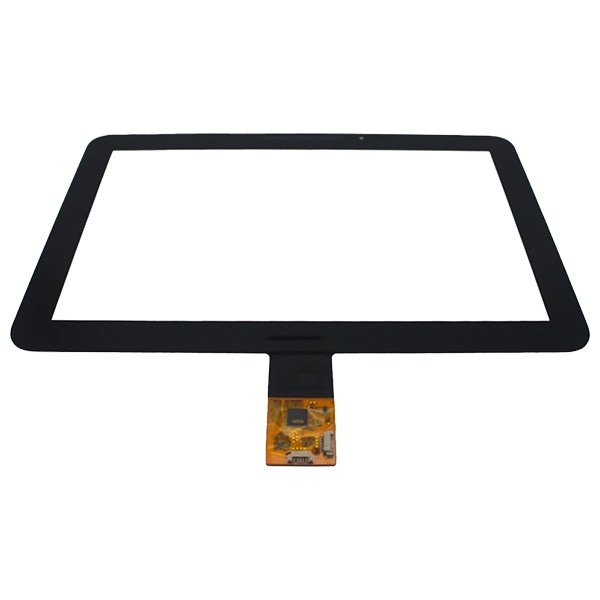
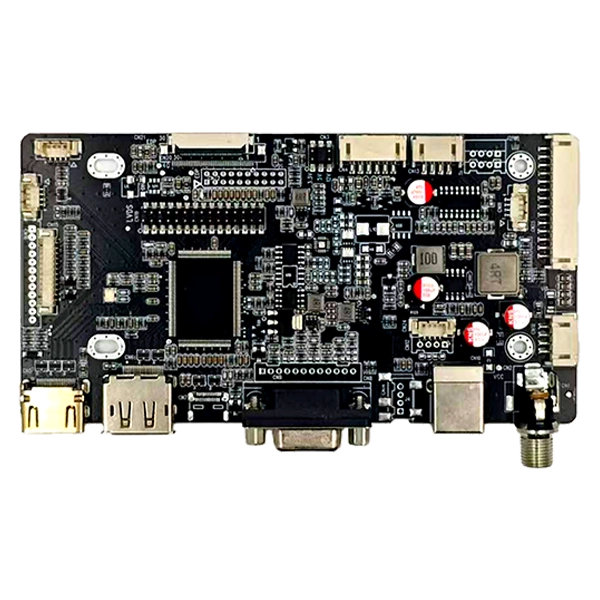
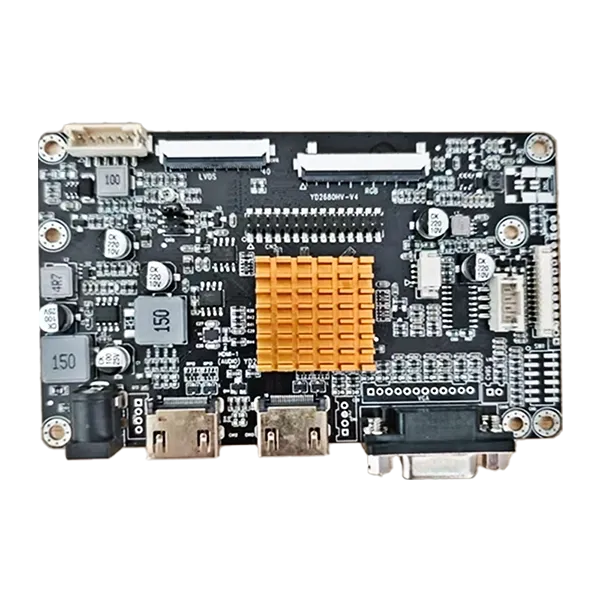
For OEM display projects that need dependable signal conversion, the HDMI To TTL Interface AD Board from SKY-TDM provides a practical way to connect HDMI video sources with TTL/RGB TFT LCD panels. Its adjustable panel voltage, integrated LED backlight control, customizable firmware, and compact industrial design make it suitable for embedded equipment, HMI terminals, medical instruments, laboratory devices, and other space-constrained display applications.
An HDMI To TTL Interface AD Board acts as the control bridge between an HDMI video source and a compatible TFT LCD panel using TTL/RGB signaling. For equipment manufacturers, the value of this type of controller extends beyond basic signal conversion. Panel voltage selection, display timing, backlight management, interface matching, firmware configuration, and PCB reliability can all affect the success of an embedded display system. The SKY-TDM solution supports multiple TTL interface configurations, 3.3V/5V panel voltage adjustment, integrated LED backlight control, customizable firmware, and an 8–18V DC power input. These features help engineers reduce additional circuitry, simplify wiring, accelerate LCD integration, and develop more flexible industrial display products.
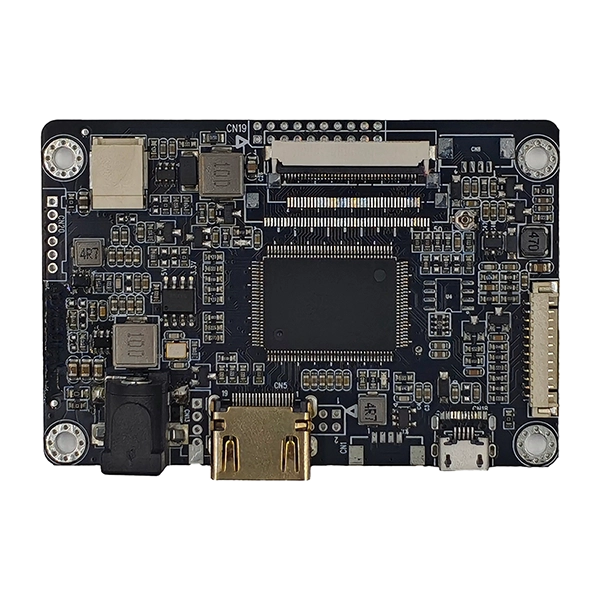
Table of Contents
- What Is an HDMI To TTL Interface AD Board?
- Why Is HDMI-to-TTL Conversion Important for TFT LCD Projects?
- What Are the Key Features to Evaluate?
- Key Technical Specifications
- Where Can the Board Be Used?
- How Should Engineers Approach LCD Integration?
- How Does Customization Improve Project Compatibility?
- Frequently Asked Questions
- Conclusion and Project Support
What Is an HDMI To TTL Interface AD Board?
An HDMI To TTL Interface AD Board is an LCD controller that converts video information from an HDMI source into a signal format that a compatible TTL/RGB TFT LCD panel can process. HDMI is widely used by computers, embedded systems, industrial controllers, and other modern digital video sources, while many TFT LCD panels use parallel RGB or TTL interfaces.
Without a suitable controller, engineers may need to redesign the host system or develop additional signal-conversion circuitry. A dedicated controller board provides a more direct integration path and can combine signal processing, panel power management, timing configuration, and backlight control in one compact solution.
The SKY-TDM HDMI To TTL Interface AD Board is designed specifically for industrial LCD integration. According to its product specifications, it supports TTL/RGB display output configurations, adjustable 3.3V or 5V panel voltage, an integrated LED driver, customizable firmware, and an 8–18V DC power supply range.
Why Is HDMI-to-TTL Conversion Important for TFT LCD Projects?
Display integration often involves more than selecting an LCD with the correct physical dimensions. Engineers must also match the video source, interface, voltage, timing, backlight, connector, and mechanical structure.
An appropriate HDMI-to-TTL controller can help address several common integration challenges:
- Interface compatibility: It provides a practical connection between HDMI video sources and TTL/RGB TFT panels.
- Power matching: Adjustable panel voltage helps accommodate different LCD electrical requirements.
- Backlight management: Integrated LED backlight control reduces the need for a separate driver circuit.
- Firmware adaptation: Display timing and other parameters can be customized for specific LCD models.
- Compact installation: A small controller layout can be valuable where enclosure space is limited.
- Development efficiency: A ready controller architecture can reduce the amount of display-interface development required by the OEM team.
What Are the Key Features to Evaluate?
1. Multiple TTL/RGB Interface Configurations
Different TFT panels can use different FPC pin assignments and signal configurations. The board supports several interface arrangements, including 40-pin and 50-pin RGB configurations, giving engineers greater flexibility when selecting suitable panels.
2. Adjustable Panel Voltage
The controller supports selectable 3.3V and 5V panel output voltage. This is important because supplying an incompatible voltage can cause display instability or potentially damage panel electronics. Voltage selection should always be verified against the LCD manufacturer's electrical specifications.
3. Integrated LED Backlight Driver
The built-in backlight control circuit simplifies system architecture by combining display control and LED backlight management on the same board. The backlight interface provides power, ON/OFF, and PWM/Vadj-related connections for system-level control.
4. Customizable Firmware
LCD panels require appropriate timing parameters to display images correctly. Firmware customization can cover parameters such as resolution, timing, display orientation, boot logo, and OSD configuration, depending on the project requirements.
5. Industrial-Oriented Design
Industrial equipment can operate continuously and may experience electrical interference, temperature variation, and space limitations. The controller is designed with stable power management, optimized signal routing, and EMI-conscious engineering to support demanding embedded applications.
Key Technical Specifications
The following table summarizes the main published specifications of the HDMI To TTL Interface AD Board:
| Feature | Specification | Integration Value |
|---|---|---|
| Video Input | HDMI | Connects with modern HDMI video sources |
| LCD Output | TTL / RGB / LVDS | Supports flexible display integration |
| Panel Voltage | 3.3V / 5V | Adapts to different panel power requirements |
| Backlight Control | Integrated LED Driver | Reduces external backlight circuitry |
| Power Supply | DC 8–18V | Suitable for various embedded power architectures |
| OSD | External Keypad Supported | Enables user-facing display adjustment |
| Firmware | Customizable | Allows project-specific display configuration |
| Operating Temperature | -20°C to 80°C | Supports a broad industrial operating range |
Engineers should confirm the complete electrical, timing, mechanical, and connector specifications against the selected LCD panel before placing an order or starting mass production.
Where Can the Board Be Used?
The compact architecture and configurable display interface make an HDMI To TTL Interface AD Board useful for a variety of embedded applications. Typical use cases include:
- Industrial HMI: Connect industrial computers or controllers to compact TFT operator displays.
- Medical instruments: Provide a display interface for diagnostic, monitoring, and laboratory equipment.
- Portable test equipment: Support compact displays where PCB space and power management are important.
- Building automation: Drive display modules used in control and monitoring terminals.
- Security equipment: Integrate TFT displays into compact monitoring and control devices.
- Embedded terminals: Provide an HDMI-to-TTL connection for customized industrial and smart devices.
These applications generally share similar requirements: stable image transmission, predictable panel compatibility, compact installation, and a controller that can be adapted to the final LCD configuration.
How Should Engineers Approach LCD Integration?
A reliable display project should begin with the LCD panel specifications rather than simply choosing a controller based on the input connector. A structured compatibility check can prevent costly redesigns later in development.
- Identify the LCD model: Confirm the exact panel part number and datasheet.
- Check the interface: Verify whether the panel uses the required TTL/RGB pin configuration.
- Confirm voltage: Match the controller's panel voltage setting with the LCD specification.
- Verify timing: Check pixel clock, horizontal timing, vertical timing, synchronization, and related parameters.
- Match the backlight: Confirm LED voltage, current, PWM requirements, and connector configuration.
- Check mechanical details: Verify FPC orientation, connector position, board dimensions, and mounting requirements.
- Test the complete assembly: Evaluate image stability, startup behavior, brightness control, temperature performance, and long-term operation.
Providing the LCD datasheet, intended application, input source, and enclosure constraints to the controller supplier can make the matching process considerably more efficient.
How Does Customization Improve Project Compatibility?
Standard controller boards are useful for common applications, but OEM products frequently have requirements that cannot be solved by a generic configuration. Firmware and hardware customization can therefore become an important part of display development.
SKY-TDM provides customization options that can include:
- LCD resolution and timing configuration
- Display frame-rate and image parameter adjustment
- Boot logo and startup interface customization
- OSD menu configuration
- Display orientation adjustment
- TTL/RGB cable and FPC connector matching
- Backlight brightness and power-sequence optimization
- PCB silk-screen and private-label customization
- Mechanical mounting adaptation
This approach is particularly useful for OEM manufacturers developing equipment with a defined LCD model, customized enclosure, or long product lifecycle. SKY-TDM also provides broader display integration capabilities covering touch panels, LCD displays, and LCD driver boards, which can help simplify multi-component sourcing.
Frequently Asked Questions
Q1: Which LCD panels can work with an HDMI To TTL Interface AD Board?
The board is designed for compatible TTL/RGB TFT LCD panels. Compatibility depends on the panel's interface, resolution, timing, voltage, connector, and backlight requirements. Providing the exact LCD model helps the engineering team verify compatibility.
Q2: Can the firmware be customized for a specific LCD?
Yes. Firmware can be customized according to project requirements, including display timing, resolution, orientation, startup logo, and OSD-related settings.
Q3: Does the board include a backlight driver?
Yes. The controller includes an integrated LED backlight driver, helping reduce the need for an additional external backlight-control module.
Q4: What panel voltage does the controller support?
The published specifications indicate selectable 3.3V and 5V panel voltage options. The correct setting should be selected according to the LCD manufacturer's specifications.
Q5: Is the board suitable for industrial equipment?
Yes. The product is designed for industrial-oriented applications such as HMI terminals, medical equipment, laboratory instruments, portable test devices, and embedded control systems. Its published operating temperature range is -20°C to 80°C.
Q6: Can SKY-TDM provide matching cables?
Yes. SKY-TDM supports interface and cable matching for display integration projects, including customized TTL/RGB signal cables and FPC connections.
Q7: Can OEM customers request customized branding?
Yes. Available customization can include PCB silk-screen markings, private-label packaging, exclusive firmware, and other project-specific requirements.
Conclusion and Project Support
Choosing the right display controller can significantly influence the efficiency and reliability of an embedded LCD project. An HDMI To TTL Interface AD Board provides a practical bridge between HDMI video sources and TTL/RGB TFT panels while combining signal conversion, panel power management, backlight control, and firmware configuration in a compact solution. For OEM manufacturers, the ability to customize timing, firmware, cables, connectors, and mechanical details can further simplify product development and support stable long-term production.
If you are developing an industrial HMI, medical instrument, laboratory device, portable tester, or another embedded display product, SKY-TDM can help evaluate your LCD model and system requirements. Explore the HDMI To TTL Interface AD Board or contact us with your LCD datasheet, required interface, quantity, and customization requirements to discuss a suitable display controller solution.