Article Summary: As industrial display systems evolve, engineers often face a practical challenge: connecting modern LVDS signal sources with TFT LCD panels that still rely on TTL/RGB interfaces. The LVDS to TTL Signal Conversion Board from SKY-TDM provides a practical bridge between these two display technologies, helping equipment manufacturers reuse existing LCD panels while reducing redesign costs, development time, and integration complexity. With industrial-grade PCB design, stable signal transmission, integrated LED backlight driving, adjustable VCOM, and customization support, this type of conversion board is suitable for industrial HMIs, medical equipment, embedded systems, transportation equipment, and other display applications.
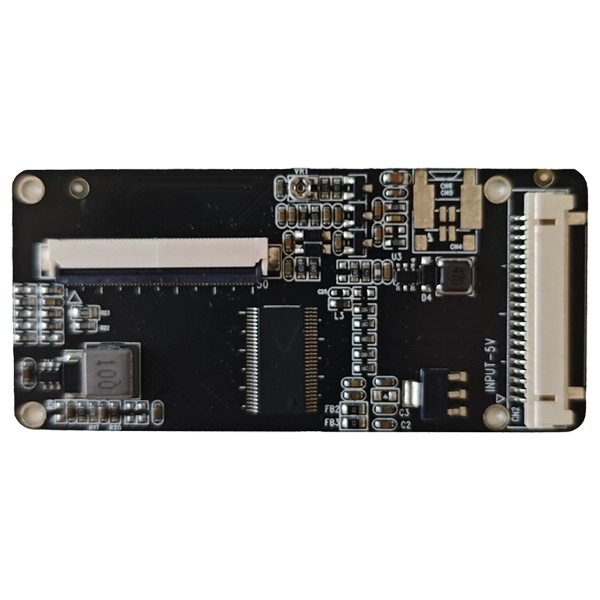
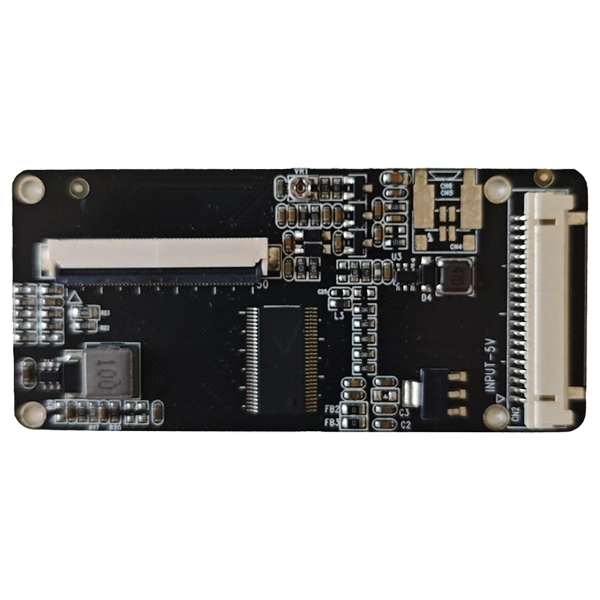
An LVDS to TTL Signal Conversion Board is a display interface circuit designed to convert LVDS differential display signals into TTL/RGB parallel signals required by compatible TFT LCD panels. This function becomes particularly important when an industrial computer, embedded controller, or display source provides an LVDS output while the selected LCD panel uses a TTL/RGB interface.
Instead of replacing an otherwise suitable LCD panel or redesigning an entire control system, engineers can introduce a conversion board between the signal source and display. This approach can be especially valuable for legacy equipment upgrades, customized industrial displays, and projects where existing LCD inventory needs to remain in use.
SKY-TDM's solution is designed around industrial display integration. The standard configuration supports an 8-bit LVDS input and a 50-pin TTL/RGB LCD output, with a 5V input supply, integrated LED driver, VCOM adjustment, and an operating temperature range of -20°C to +70°C.
Display interfaces are not always interchangeable. LVDS and TTL/RGB use different methods of transmitting image data, meaning a direct connection is generally not possible when the source and LCD panel use different interface architectures.
This creates several challenges for OEM equipment manufacturers:
A properly engineered conversion board addresses the interface mismatch while keeping the rest of the display architecture relatively unchanged. For manufacturers upgrading legacy equipment, this can provide a more efficient path than redesigning the complete display system.
Signal integrity is one of the most important factors in display conversion. Optimized differential routing helps reduce signal distortion and supports stable image transmission between the LVDS source and conversion circuitry.
Industrial equipment frequently operates alongside motors, switching power supplies, communication devices, and other sources of electromagnetic interference. A carefully designed PCB layout and power architecture can help reduce unwanted interference and improve overall system stability.
The board provides a TTL/RGB 50-pin LCD interface for compatible TFT panels. The interface includes RGB data, synchronization signals, clock, power-related signals, VCOM, reset, and other display control connections.
An integrated LED backlight driver helps simplify the overall display architecture. Instead of sourcing multiple independent circuits, equipment manufacturers can integrate the conversion and backlight functions into a more compact display solution.
VCOM adjustment provides additional flexibility when matching the board with different LCD panels. Engineers can fine-tune the display configuration to help achieve suitable image performance for the selected panel.
Display integration projects frequently require customized connectors, pin definitions, cable lengths, mounting locations, firmware configurations, or LCD timing parameters. A conversion board manufacturer capable of adapting these elements can significantly reduce integration work for OEM customers.
The following table summarizes the typical configuration of the SKY-TDM LVDS to TTL Signal Conversion Board. Actual specifications may vary according to the selected LCD panel and customized project requirements.
| Item | Typical Specification |
|---|---|
| Input Interface | LVDS, 8-bit |
| LCD Output Interface | TTL/RGB, 50-pin |
| Input Voltage | 5V |
| Backlight Driver | Integrated LED driver |
| VCOM Adjustment | Supported |
| Operating Temperature | -20°C to +70°C |
| Custom Design | Supported |
| Typical LVDS Connector | HRS DF14-20 / DF19-20 interface |
| LCD Connector | TTL FFC 50-pin |
For engineering projects, the interface specification should always be checked against the exact LCD panel datasheet. Pin count alone does not guarantee compatibility because signal definitions, voltage requirements, timing, orientation, and connector assignments may differ between panels.
The flexibility of LVDS-to-TTL conversion makes this technology useful across a variety of industrial and embedded display projects.
For example, an equipment manufacturer may have a proven 50-pin TTL LCD panel already integrated into an established machine. If the replacement controller outputs LVDS rather than TTL/RGB, a conversion board can provide an interface bridge without requiring the manufacturer to replace the entire display assembly.
Selecting a conversion board should begin with the LCD panel rather than simply the desired connector type. Engineers should collect the complete panel interface information before placing an order.
Check whether the source provides single-channel or dual-channel LVDS, the bit depth, signal timing, voltage requirements, and connector configuration. SKY-TDM's standard solution supports single-channel 8-bit LVDS input, while customized designs can be evaluated for different requirements.
A 50-pin TTL connector does not necessarily mean that every LCD uses the same pinout. RGB data, HSYNC, VSYNC, DE, DCLK, VCOM, power, backlight, and control signals should be compared carefully with the conversion board definition.
LCD resolution, pixel clock, horizontal timing, vertical timing, and synchronization requirements should match the board configuration. Firmware or hardware adjustments may be necessary for different LCD models.
Connector position, cable length, PCB dimensions, mounting holes, and available installation space should be considered during the selection stage. A compact customized PCB can simplify integration into equipment with restricted internal space.
For industrial projects, the initial sample is only one part of the procurement decision. Buyers should also evaluate engineering support, customization capabilities, quality control, sample testing, production capacity, and long-term product availability.
For industrial buyers, the value of a conversion board goes beyond basic signal conversion. SKY-TDM positions its solution as part of a broader industrial display integration service, supporting OEM and ODM projects from compatibility evaluation through production.
Key advantages include:
This one-stop approach can be particularly useful for OEM manufacturers that need a conversion board matched to a specific LCD rather than a generic development board. By confirming the LCD model, interface definition, resolution, connector, and mechanical requirements at the beginning of the project, engineers can reduce compatibility risks before mass production.
The standard solution is designed for compatible TFT LCD panels using a 50-pin TTL/RGB interface. Exact compatibility depends on the LCD's pin definition, timing, resolution, voltage, and other electrical requirements.
Yes. For OEM and ODM projects, connector types, pin assignments, cable lengths, and interface definitions can be customized according to the target LCD and equipment structure.
Yes. Different LCD resolutions and timing requirements can be evaluated for corresponding hardware or firmware configurations. Engineers should provide the exact LCD model or datasheet for compatibility assessment.
Yes. The board is designed for industrial display integration and supports an operating temperature range of -20°C to +70°C. Its PCB layout, power design, and signal architecture are optimized for stable operation in demanding applications.
Yes. Matching cable assemblies can be provided, including LVDS cables, backlight cables, power cables, and customized harnesses where required.
The standard version supports single-channel 8-bit LVDS input. Dual-channel LVDS requirements can be evaluated for customized board development according to the target LCD's timing and interface specifications.
Yes. Sample evaluation is strongly recommended for industrial projects. Testing the conversion board with the actual LCD panel and system controller can verify signal compatibility, image quality, timing, backlight operation, and mechanical integration before volume production.
An LVDS to TTL Signal Conversion Board can be an effective solution when modern LVDS-based systems need to work with existing TTL/RGB TFT LCD panels. By combining stable signal conversion, industrial-oriented PCB design, integrated backlight driving, VCOM adjustment, and customization capabilities, it can help OEMs simplify display integration while extending the usability of existing LCD hardware. For projects requiring customized interfaces, LCD compatibility evaluation, cable matching, or production support, choosing an experienced industrial display partner can make the transition from prototype to mass production much more efficient. If you are looking for a reliable China manufacturer and supplier for a customized LVDS to TTL Signal Conversion Board, contact us with your LCD model, interface definition, resolution, and system requirements to discuss a suitable solution with the SKY-TDM engineering team.